The Mandate Era: How Courts are Enforcing AI Accountability and Technical Transparency
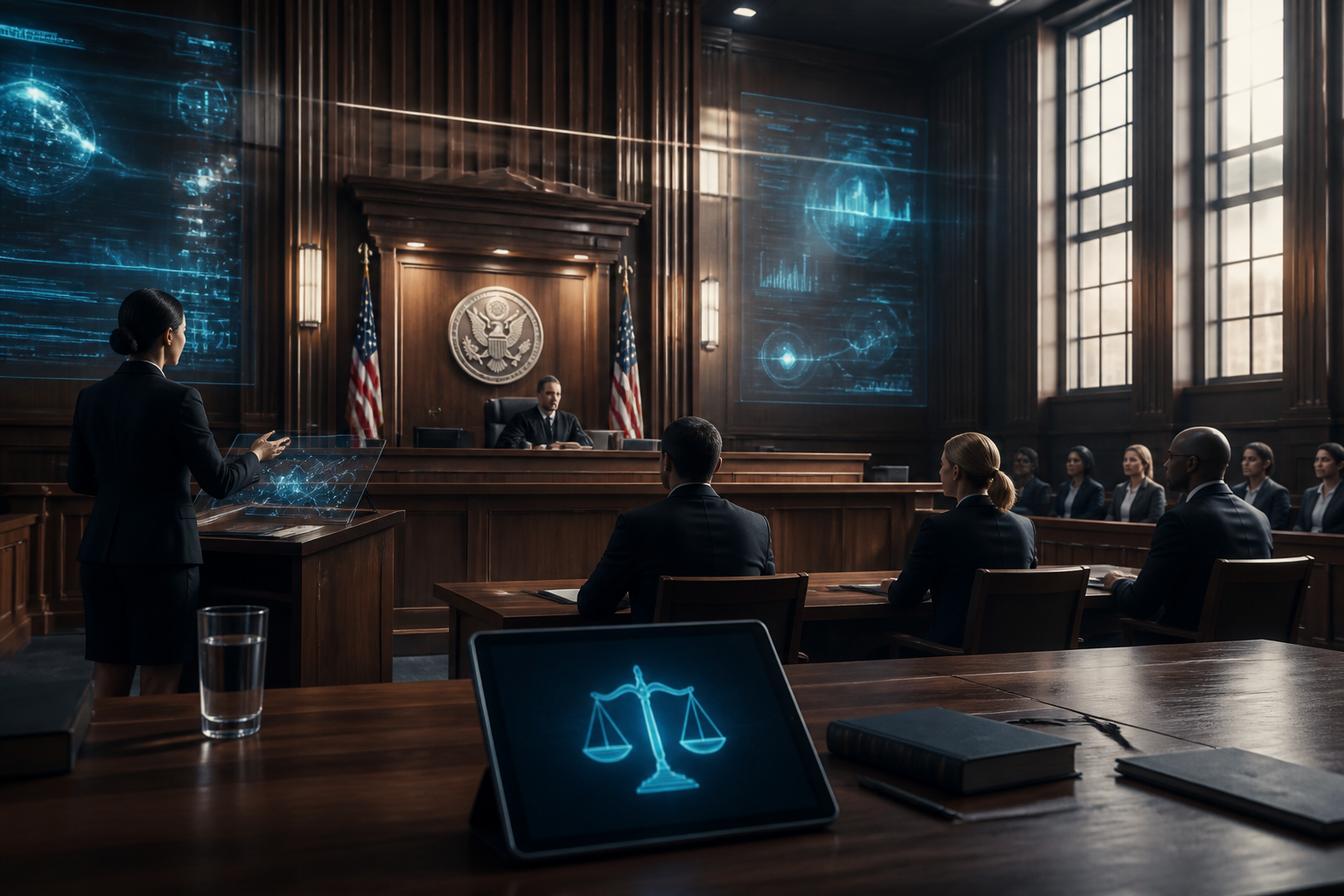
As of June 2026, the era of voluntary AI disclosure has ended. Courts across the United States are now implementing mandatory technical audits and 'human-in-the-loop' certifications to combat the surge of high-fidelity legal hallucinations.
The Collapse of Voluntary Disclosure and the Rise of Judicial Oversight
By mid-2026, the legal industry has moved past the novelty of generative AI and into a period of aggressive secondary-stage regulation. What began as a series of isolated standing orders from judges like Judge Brantley Starr of the Northern District of Texas has evolved into a standardized national movement. Today, the focus is no longer just on whether a lawyer used AI, but precisely which model was used, the temperature settings applied during generation, and the specific verification steps taken to cross-reference primary sources. This shift follows a catastrophic failure earlier this year in the Ninth Circuit, where an AI-drafted appellate brief cited three fictitious statutes from a non-existent 2025 regulatory update, leading to a sanction that cost a tier-one firm over $450,000 and the suspension of two senior partners.
The ‘Mata Legacy’ and the New Federal Rule of Civil Procedure 11.1
The shadow of Mata v. Avianca—the 2023 case that first exposed the dangers of ChatGPT-generated citations—continues to loom over the 2026 legal landscape. However, the response has moved from punitive to preventative. The proposed addition of Rule 11.1 to the Federal Rules of Civil Procedure is currently under review, which would require a 'Certification of Algorithmic Verification' for every electronically filed document. This requires practitioners to sign a declaration affirming that every citation has been checked against a verified legal database like Westlaw Precision or Lexis+ AI, rather than relying on the internal weights of a large language model (LLM).
Several district courts in California and New York have already adopted local versions of this rule. These mandates require attorneys to disclose the 'Technical Stack' used in their workflow. For instance, if a lawyer utilizes a Retrieval-Augmented Generation (RAG) system, they must be prepared to provide the court with the document corpus the system was permitted to search. The objective is to eliminate 'black box' advocacy, where neither the attorney nor the judge truly understands the origin of a persuasive argument or a statutory interpretation.
Corporate Counsel and the Push for Audit Logs
The pressure is not only coming from the bench but also from the boardroom. Fortune 500 legal departments are now requiring their outside counsel to provide 'AI Audit Logs' as part of their monthly billing cycles. These logs, generated by tools such as CoCounsel and Harvey, provide a granular trail of how AI was utilized in the research and drafting phases. This push for transparency is driven by the fear of intellectual property leakage and the risk of 'silent' hallucinations that could compromise long-term litigation strategies.
The Role of Specialized AI Masters
In complex multidistrict litigation (MDL), judges are increasingly appointing 'AI Special Masters.' These are neutral third-party experts tasked with reviewing the algorithmic fairness of the e-discovery tools and predictive coding models used by either side. This allows the court to navigate technical disputes without being slowed down by the information asymmetry that often exists between tech-heavy plaintiff firms and traditional defense firms.
The question is no longer whether AI can practice law, but whether a human lawyer can truthfully certify that they remain the ultimate architect of the legal theory being presented. We are seeing a fundamental redefinition of 'competence' under Model Rule 1.1.
State Bar Responses and Ethics Opinions
While federal courts focus on procedural filings, State Bars are tackling the ethical underpinnings of AI usage. The American Bar Association's (ABA) 2025 Formal Opinion 515 set the stage by clarifying that charging 'standard hourly rates' for AI-generated work that took seconds to produce could constitute an unconscionable fee. In 2026, we are seeing the first wave of disciplinary actions based on this opinion. State Bars in Florida and Illinois have pioneered 'AI Disclosure Forms' that must be shared with clients before any generative tool is used on their matter, ensuring informed consent is maintained.
These ethical guidelines also address the issue of 'Model Bias.' Modern litigation now involves challenging the opposing side's AI for inherent biases in how it prioritizes case law. If an AI tool is trained predominantly on federal cases, it might overlook nuanced state-level precedents. Courts are beginning to allow 'algorithmic cross-examination,' where a party can challenge the validity of their opponent's AI output by proving it was trained on an incomplete or biased dataset.
Technical Solutions: Watermarking and Verified Citations
In response to these mandates, legal tech providers are embedding 'provenance metadata' into every document. Leading platforms now include a cryptographic watermark that proves a brief was reviewed by a human editor. Furthermore, 'Checked by AI' badges are being replaced by 'Human-Verified' stamps, where a lawyer must manually click on every citation to confirm its existence before the software allows the document to be exported for filing.
- Implementation of 'Zero-Temperature' environments for legal research to minimize creative output.
- Mandatory use of 'Private LLM' instances to ensure attorney-client privilege is not waived through data training.
- Requirement for 'Hallucination Insurance' riders in professional liability policies for mid-to-large sized firms.
- The emergence of 'Adversarial Prompting' as a discovery tactic to expose weaknesses in an opponent's automated systems.
The Future of the AI-Compliant Practitioner
Looking toward the end of 2026, the divide between 'AI-native' and 'AI-resistant' firms is closing, replaced by a new standard: the 'AI-Accountable' firm. The successful lawyer of this era is one who treats AI as an advanced paralegal that requires constant, skeptical supervision. The mandates we see today are not designed to stifle innovation, but to provide a stable framework where the speed of AI can be harnessed without sacrificing the integrity of the judicial process.
As the Supreme Court begins to consider a petition regarding the 'Due Process of Algorithms,' the legal industry must prepare for a world where every automated decision is subject to judicial review. The current wave of mandates is merely the first step in ensuring that while technology changes the practice of law, the core principles of truth and accountability remain unassailable.
Key Takeaways
- →Federal and state courts are moving from suggested disclosure to mandatory 'Algorithmic Verification' certifications.
- →The proposed Rule 11.1 would codify AI oversight into the Federal Rules of Civil Procedure.
- →Corporate clients are demanding granular AI audit logs to ensure billing transparency and data security.
- →AI Special Masters are becoming common in complex litigation to resolve technical disputes and audit model bias.
- →State Bars are increasingly disciplining lawyers for 'silent' AI usage and unconscionable fee structures related to automated tasks.
Frequently Asked Questions
What is a Certification of Algorithmic Verification?+
It is a legal declaration signed by an attorney affirming that every citation and factual claim in an AI-assisted filing has been manually verified against an official legal record. This moves the burden of 'hallucination detection' entirely onto the human practitioner, preventing the excuse of technical error during sanction hearings.
Can judges ban the use of AI in their courtrooms entirely?+
While some judges initially attempted total bans, the trend in 2026 has shifted toward 'regulated usage.' Most jurisdictional experts agree that a total ban is impractical and likely to be overturned, as AI is now deeply integrated into standard legal research tools like Westlaw and LexisNexis.
Does using AI waive attorney-client privilege?+
Not if handled correctly. Current mandates emphasize using 'closed-loop' or 'private' AI instances where data is not used to train the base model. Using public, consumer-grade AI tools for client work is generally considered a violation of the duty of confidentiality under Model Rule 1.6.
How do AI Audit Logs affect legal billing?+
Audit logs provide a timestamped record of AI interactions. Clients use these to ensure they aren't being billed human hourly rates for tasks that the log shows were completed by an AI in seconds. This is leading to a broader shift toward alternative fee arrangements (AFAs) for research-heavy tasks.
Continue reading
Found this useful?
Share it with your network.
Stay ahead of legal AI
Get our weekly briefing on AI for legal & contracts — read by 12,000+ general counsel and legal ops leaders.
Subscribe to the briefing