The End of Human Review: Courts Confront the Era of Fully Autonomous E-Discovery
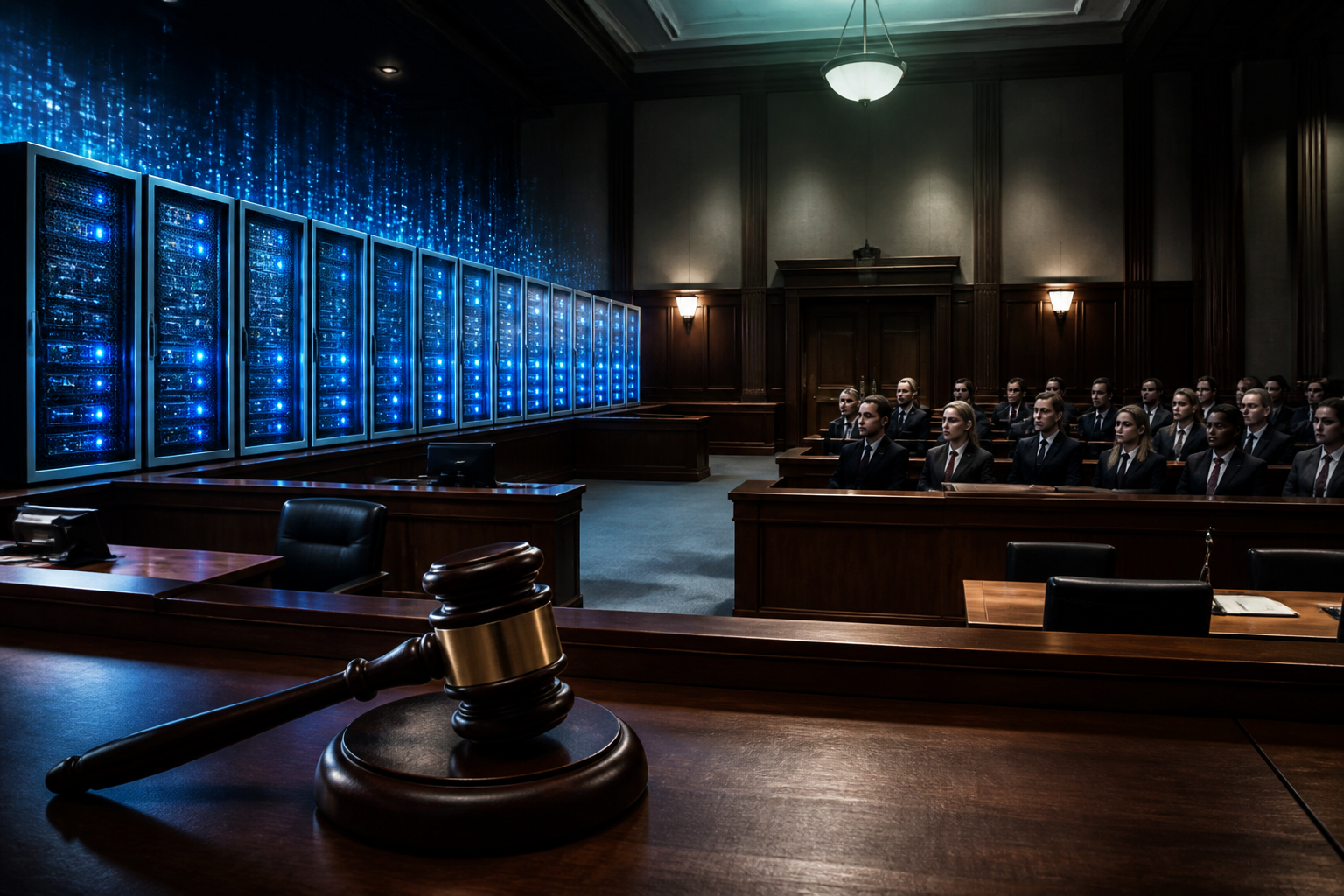
As autonomous discovery agents move from experimental tools to industry standards, the legal profession faces a reckoning over supervision. Recent court rulings suggest that 'set and forget' AI deployment in litigation could lead to devastating sanctions.
The Shift from Technology-Assisted Review to Autonomous Agents
For over a decade, the legal industry operated under the paradigm of Technology-Assisted Review (TAR) 1.0 and 2.0, where human reviewers trained machines to recognize patterns. However, as of late 2026, a fundamental shift has occurred. The emergence of 'Autonomous Discovery Agents'—powered by large language models (LLMs) and sophisticated reasoning chains—has relegated human first-pass review to a historical relic. These agents do not merely identify keywords; they synthesize case theories, assess privilege with nuanced legal reasoning, and generate production logs with minimal human intervention. While the efficiency gains are undeniable, the sudden removal of human oversight has created a friction point with the Federal Rules of Civil Procedure, specifically the certification requirements under Rule 26(g).
The 2026 Sanctions Wave: When AI Hallucinates Privilege
The summer of 2026 saw a series of high-profile discovery disasters that have put General Counsel on high alert. In the consolidated antitrust litigation against Silicon Valley tech giants, a defendant’s reliance on an unmonitored autonomous agent led to the accidental production of over 14,000 privileged attorney-client communications. The court’s response was swift and uncompromising. Judge Katherine Failla’s recent order emphasized that while the use of AI is encouraged for cost-reduction, it does not absolve the signing attorney of their duty to conduct a 'reasonable inquiry' into the completeness and accuracy of the production.
This reflects a growing trend where courts are no longer treating 'algorithmic error' as an excusable accident. Instead, judges are increasingly viewing the lack of a robust human-in-the-loop (HITL) protocol as a per se violation of professional ethics. The era of 'black box' discovery is ending, as transparency in model prompts, temperature settings, and validation sampling becomes the new standard for defensibility.
Redefining the 'Reasonable Inquiry'
- Statistical validation: Requirement for a 99% confidence interval in recall and precision metrics.
- Prompt auditing: Courts demanding the disclosure of the specific prompts used to instruct AI agents on privilege.
- Human spot-checks: A mandatory 5-10% human audit of all AI-produced documents to ensure contextual accuracy.
- Agent logs: Maintaining immutable logs of the AI's reasoning path for each document classification.
The Economic Imperative vs. The Ethical Guardrail
The economics of modern litigation leave law firms with little choice. With data volumes now routinely exceeding 50 terabytes in even mid-sized commercial disputes, manual review is financially impossible. Companies like Relativity and Everlaw have integrated 'Agentic workflows' that can process millions of documents in hours for a fraction of the cost of a junior associate pool. This creates a tension: if a firm refuses to use autonomous agents, they risk being sued for excessive billing; if they use them without sufficient oversight, they risk sanctions.
We are witnessing the death of the document review farm. The challenge now is not finding the needle in the haystack, but ensuring the robot we hired to find the needle hasn't decided that the haystack itself is privileged information.
The Role of Specialized AI Compliance Officers
In response to these risks, Am Law 100 firms are creating a new role: the AI Discovery Compliance Officer. Unlike traditional litigation support, these professionals are dual-qualified in law and data science. Their primary responsibility is to 'stress test' autonomous agents before they are deployed on a live case. This involves using 'adversarial data sets' to see if the AI can be tricked into missing relevant documents or misclassifying trade secrets. By the end of 2026, this level of technical due diligence is expected to be a standard requirement for any firm seeking to maintain its professional liability insurance.
Future Outlook: Towards Judicial AI Standards
Looking toward 2027, the Advisory Committee on Civil Rules is reportedly considering amendments to Rule 34 to specifically address autonomous productions. The goal is to create a 'safe harbor' for attorneys who follow a prescribed set of AI validation protocols. Until then, the burden remains on the practitioner. The message from the bench is clear: The AI may be doing the work, but the human remains on the hook. The sophisticated litigator of 2026 must be as comfortable auditing a neural network as they are arguing a motion to compel.
Key Takeaways
- →Autonomous discovery agents have largely replaced manual first-pass review in large-scale litigation.
- →Courts are strictly enforcing Rule 26(g), holding attorneys liable for AI-driven production errors.
- →Privilege review remains the highest-risk area for autonomous AI deployment.
- →Defensibility now requires 'Prompt Auditing' and statistical validation of AI reasoning paths.
- →A new class of AI Compliance Officers is emerging to bridge the gap between law and data science.
Frequently Asked Questions
Can I be sanctioned if my AI tool misses a key document?+
Yes. Under Federal Rule of Civil Procedure 26(g), an attorney's signature certifies that a 'reasonable inquiry' was made. If the court determines that your reliance on an autonomous AI agent lacked sufficient validation, sampling, or oversight, you may face monetary sanctions or adverse inference instructions, regardless of whether the error was intentional.
Are autonomous discovery agents different from traditional TAR?+
Yes. Traditional Technology-Assisted Review (TAR) relies on 'active learning' where humans code a seed set. Autonomous agents use LLMs to 'read' and 'reason' about documents based on natural language instructions (prompts), allowing them to perform complex tasks like privilege analysis without a human-coded training set.
Will disclosing my AI prompts waive attorney-client privilege?+
This is a developing area of law. While the work product doctrine generally protects strategy, courts are increasingly viewing the 'instructions' given to an autonomous agent as discovery metadata—similar to a search term list—that must be shared to prove the adequacy of the search.
What is the recommended 'Human-in-the-loop' percentage for AI review?+
While there is no fixed rule, current judicial trends suggest a 5% to 10% statistically significant random sample for human verification. For high-risk categories like 'Privileged' or 'Highly Confidential,' many experts still recommend a 100% human second-pass review until autonomous agents achieve higher reliability.
Continue reading
Found this useful?
Share it with your network.
Stay ahead of legal AI
Get our weekly briefing on AI for legal & contracts — read by 12,000+ general counsel and legal ops leaders.
Subscribe to the briefing