The Rise of Autonomous Legal Agents: Beyond Simple Prompting to Complex LLM Orchestration
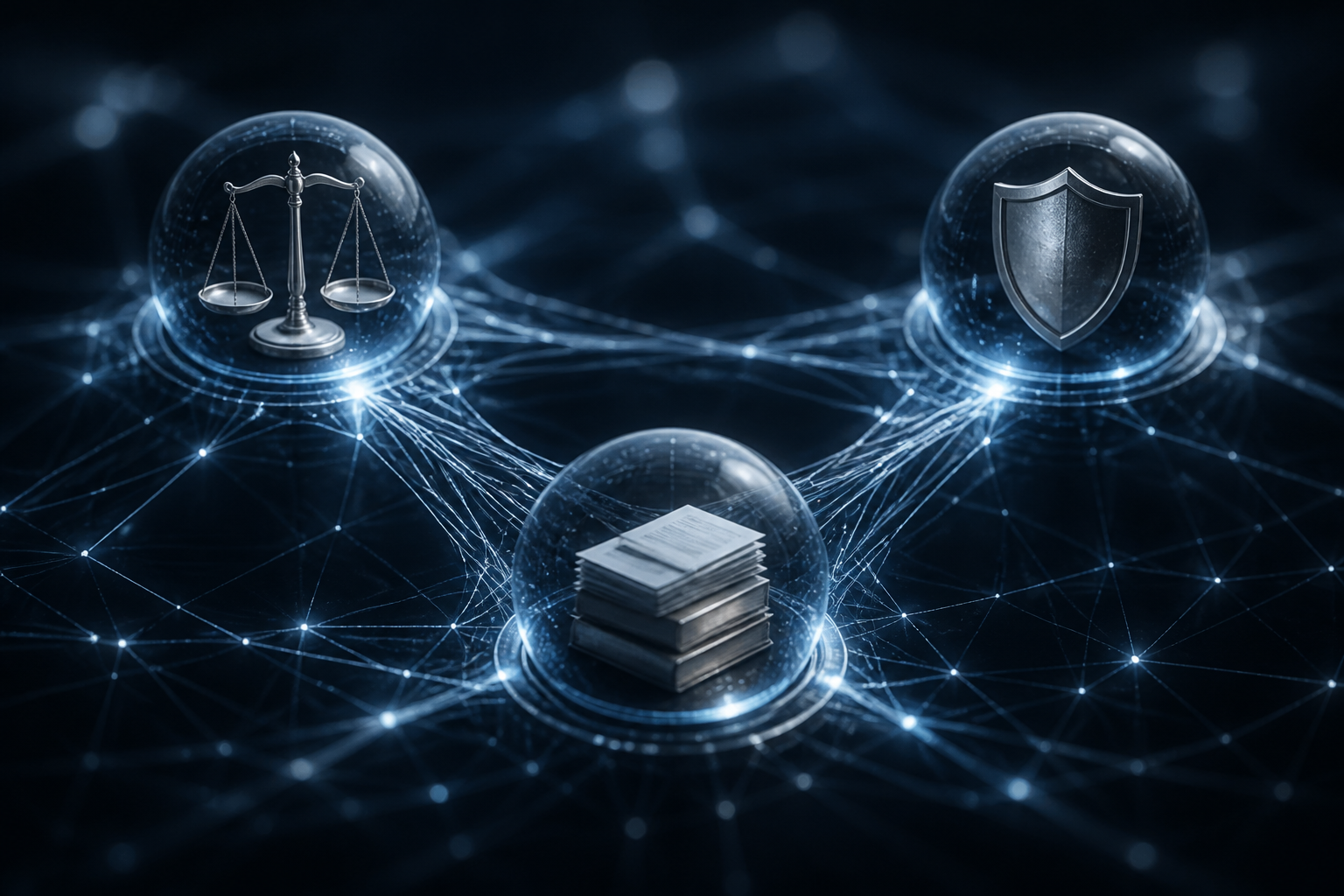
Law firms are shifting from basic chatbots to autonomous legal agents capable of executing multi-stage workflows without human intervention. This evolution marks a critical turning point in legal tech, moving from predictive text to goal-oriented reasoning.
The Transition from General LLMs to Specialized Legal Orchestrators
As of July 2026, the legal industry has moved past the 'chatbot fatigue' of the early mid-2020s. The novelty of Large Language Models (LLMs) that can draft a simple memo has been replaced by a demand for autonomous legal agents—integrated systems that do not just provide answers, but execute complex, multi-step tasks with minimal human oversight. These agents are defined by their ability to use tools, manage their own memory, and break down a high-level goal, such as 'Prepare a comprehensive response to this discovery request,' into dozens of discrete sub-tasks. Unlike early iterations of AI, which were reactive, these new agentic systems are proactive, moving through iterative cycles of planning, execution, and self-correction.
The Architecture of Agentic Legal Workflows
The core technological shift driving this change is the move toward 'Agentic Orchestration.' In this framework, a central controller—often powered by models like OpenAI’s GPT-5 or Anthropic’s Claude 4—serves as the brain, delegating tasks to specialized sub-agents. For instance, in a complex M&A due diligence scenario, one agent might be tasked exclusively with identifying change-of-control provisions, while another analyzes lease agreements for termination rights, and a third synthesizes their findings into a final risk report. This modular approach significantly reduces hallucinations, as each agent operates within a strictly defined scope and references a curated knowledge base.
Real-World Implementation: Harvey and CoCounsel 3.0
Leading the charge are platforms like Harvey and Casetext’s CoCounsel (now part of Thomson Reuters). In mid-2026, Harvey’s 'Workflows' feature has become standard in the Am Law 100, allowing associates to build custom agents that connect directly to a firm’s internal Document Management System (DMS) like iManage or NetDocuments. These agents are not merely searching for text; they are interpreting the context of decades of firm work product to ensure that new advice aligns with established institutional stances. When a partner asks for a jurisdictional analysis, the agent retrieves the relevant statutes, checks for recent trial court rulings that Westlaw has indexed within the hour, and flags discrepancies between current law and the firm’s previous filings.
From Retrieval-Augmented Generation to Reasoning-Augmented Planning
While 2024 and 2025 were dominated by Retrieval-Augmented Generation (RAG), the 2026 landscape is defined by Reasoning-Augmented Planning (RAP). RAG provided the AI with the right documents, but RAP allows the AI to understand the *strategy* behind a legal move. For example, in litigation, an autonomous agent can now simulate how an opposing counsel might challenge a specific piece of evidence based on that counsel's previous filing history. This involves the agent creating a 'mental model' of the adversary, prompting itself to find weaknesses in its own arguments—a process known as 'Chain-of-Thought' reasoning applied at an organizational scale.
The legal profession is moving from a 'search-and-synthesize' model to an 'execute-and-verify' model. We are no longer asking AI to tell us what the law is; we are tasking it with performing the heavy lifting of procedural execution, which allows lawyers to act truly as strategic architects rather than document processors.
The Regulatory Response and Ethical Guardrails
The surge in autonomous agents has not gone unnoticed by regulatory bodies. The American Bar Association (ABA) recently updated its Model Rules of Professional Conduct specifically to address 'Supervisory Obligations over Autonomous Systems.' This update clarifies that a lawyer's duty of competence now includes the 'competent selection and oversight' of autonomous agents. Similarly, the European Union’s AI Act has entered a stricter enforcement phase, categorizing autonomous legal agents used in judicial systems as 'high-risk,' requiring rigorous logging of their decision-making pathways.
- Requirement for 'Human-in-the-Loop' (HITL) checkpoints at every significant project milestone.
- Mandatory auditing of agentic logs to prevent 'black box' legal reasoning.
- Strict data residency requirements to ensure that agentic memory does not leak across client boundaries.
- Establishment of 'Kill Switches' to immediately halt autonomous processes if they deviate from narrow legal objectives.
Impact on Law Firm Economics and the Billable Hour
The economic implications of autonomous agents are profound. Firms that have successfully integrated these systems report a 40% reduction in the time required for junior-level tasks. This has placed unprecedented pressure on the traditional billable hour model. To survive, firms are increasingly moving toward value-based pricing or 'outcome-linked' retainers. Clients, particularly large corporate legal departments, are now demanding 'AI-adjusted' invoices, refusing to pay full rates for work that they know was orchestrated by an autonomous system. This is forcing a massive reshuffling of the associate pipeline, as the requirement for hundreds of hours of manual document review—the traditional 'breeding ground' for law firm training—evaporates.
The Road Ahead: Inter-Agent Communication
The next frontier, already appearing in beta trials at firms like Kirkland & Ellis and Latham & Watkins, is inter-firm agent communication. Imagine a world where a buyer’s AI agent negotiates secondary terms with a seller’s AI agent in real-time, only escalating to human lawyers when a conflict of 'strategic importance' arises. This 'Agent-to-Agent' (A2A) protocol could potentially reduce the closing time of complex transactions from months to days. However, this also raises the stakes for cybersecurity, as the potential for 'prompt injection' or adversarial attacks between agents becomes a primary concern for IT departments.
Key Takeaways
- →Autonomous legal agents have surpassed basic LLMs by utilizing multi-step task orchestration and self-correction.
- →The industry has shifted from Retrieval-Augmented Generation (RAG) to Reasoning-Augmented Planning (RAP).
- →ABA Model Rules now include specific supervisory obligations for controlling autonomous AI systems.
- →Economic pressure from AI efficiency is accelerating the transition from billable hours to value-based pricing.
- →Inter-firm agent negotiation (A2A) is the next technological frontier for M&A and transactional law.
Frequently Asked Questions
What is the difference between a legal chatbot and an autonomous legal agent?+
A chatbot is reactive, responding to a single prompt with a single answer. An autonomous legal agent is goal-oriented; given a high-level objective, it can plan sub-tasks, use external tools like legal databases, and verify its own work across multiple iterations without constant human prompting.
Are autonomous legal agents replacing junior associates?+
While they aren't replacing the 'role' of the associate entirely, they are automating the majority of the tasks traditionally assigned to them. This is shifting the junior associate's role from a 'doer' of manual tasks to a 'reviewer' and 'orchestrator' of AI-driven workflows.
How do these agents handle data privacy and attorney-client privilege?+
Modern legal agents use 'Private LLM' instances where data is not used to train the base model. Furthermore, advanced orchestration platforms allow firms to set hard boundaries, ensuring that an agent's 'memory' is purged or siloed between different client matters to maintain privilege.
What is the biggest risk of using autonomous agents in litigation?+
The primary risk is 'delegation bias,' where a lawyer may over-rely on the agent’s output and fail to notice subtle errors in legal reasoning or procedural nuances. Despite their autonomy, these systems still require human-in-the-loop checkpoints to ensure professional accountability.
Continue reading
Found this useful?
Share it with your network.
Stay ahead of legal AI
Get our weekly briefing on AI for legal & contracts — read by 12,000+ general counsel and legal ops leaders.
Subscribe to the briefing