From Copilots to Agents: The Shift to Autonomous AI in Large Law Firms
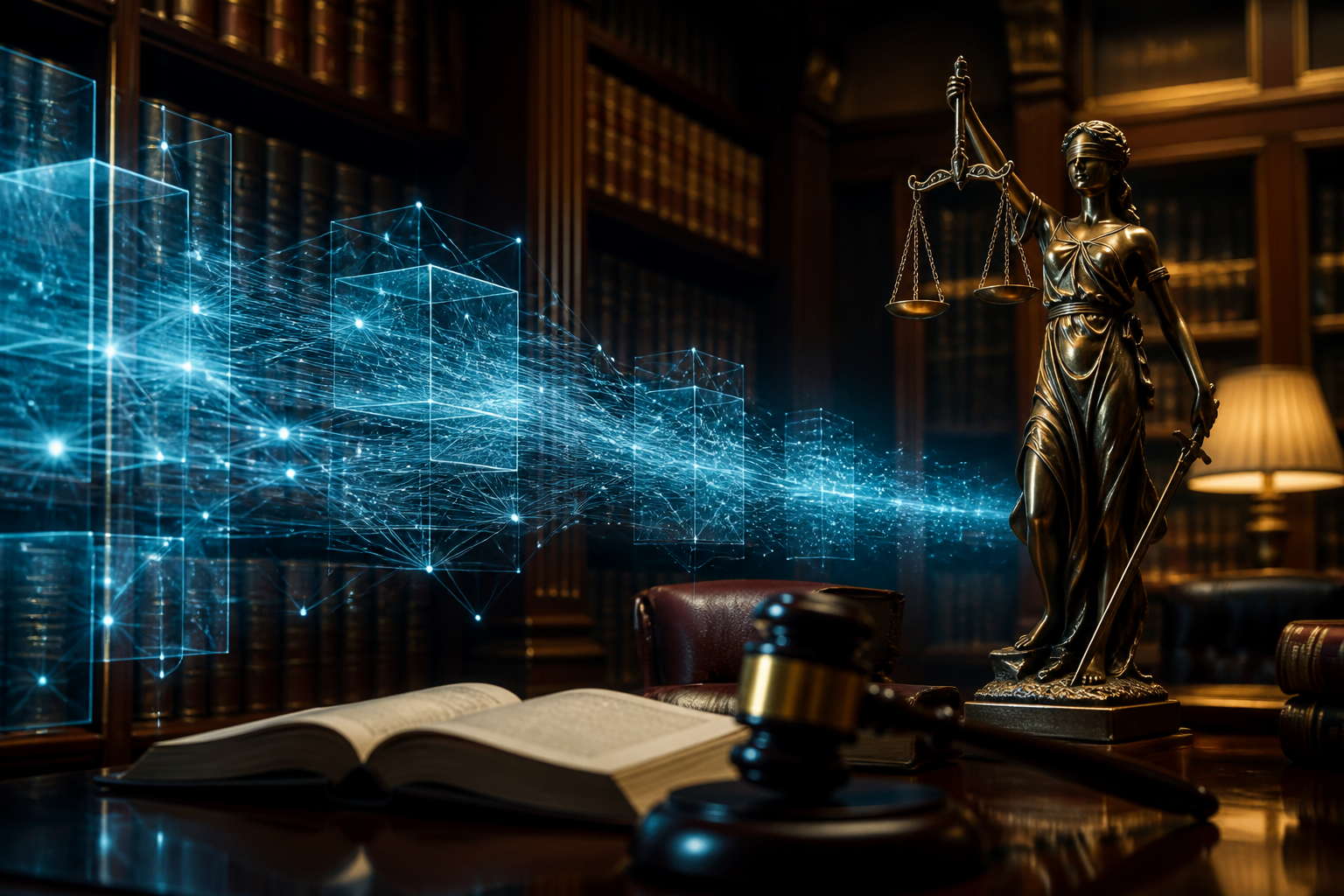
The legal industry is pivoting from generative assistants to autonomous agentic systems capable of executing multi-step legal workflows without human intervention. This shift represents a fundamental change in law firm economics and liability.
The End of the Chatbot Era
For the past three years, the legal technology sector has been dominated by 'copilots'—tools that require constant human prompting to summarize a deposition or draft a clause. However, as of July 2026, the industry has reached a tipping point toward autonomous legal AI agents. Unlike their predecessors, these systems are built on agentic architectures that allow them to use tools, access external databases, and self-correct across multi-stage projects. Firms like Kirkland & Ellis and Latham & Watkins are no longer just asking AI to 'write a summary'; they are deploying agents tasked with 'conducting a comprehensive anti-trust audit of these 5,000 documents and flagging every discrepancy for human review.'
This shift is powered by advances in long-context windows and orchestration frameworks such as LangGraph and AutoGPT-Legal, which enable LLMs to break down complex legal objectives into smaller, executable steps. The focus has moved from the quality of the 'prose' to the systemic reliability of the 'workflow.' Consequently, the role of the junior associate is being radically redefined from a primary researcher to a systems overseer.
The Agentic Architecture Advantage
The core differentiator in 2026 is the ability of AI to interact with the environment. Traditional RAG (Retrieval-Augmented Generation) systems were passive. Modern agents, however, are integrated directly into DMS (Document Management Systems) like iManage and NetDocuments. When a partner assigns a task to an agent, the system doesn't just search for text; it creates a plan, retrieves relevant case law from Westlaw or LexisNexis, verifies the current status of that case law via 'Shepardizing,' drafts the motion, and then cross-checks the draft against the firm's specific internal style guide.
Real-World Deployment: Harvey and Thomson Reuters
Harvey, which secured significant Series C funding in mid-2025, has transitioned its platform from a chat interface to a suite of specialized agents. Their 'Litigation Agent' can ingest thousands of pages of discovery and produce a first-draft statement of facts that is 90% accurate before a human touches it. Similarly, Thomson Reuters has integrated its CoCounsel agents into the broader Microsoft 365 ecosystem, allowing the AI to 'wait' for an email response from opposing counsel and automatically prepare a counter-proposal based on predestined parameters.
We are moving away from requesting content toward delegating outcomes. The legal professional is becoming the 'pilot in command' of a fleet of digital associates that work 24/7 without the fatigue-related errors that plague high-pressure litigation.
Regulatory Headwinds and the Duty to Supervise
The rise of autonomous agents has not gone unnoticed by regulators. The American Bar Association (ABA) recently released Formal Opinion 512, which specifically addresses the ethical complexities of Generative AI. The consensus in the summer of 2026 is that ABA Model Rule 5.1 (Responsibilities of a Partner or Supervisory Lawyer) applies to autonomous systems just as it does to human subordinates. If an AI agent halluncinates a citation or fails to disclose a conflict of interest, the fault lies entirely with the supervising attorney.
Furthermore, the United States Patent and Trademark Office (USPTO) and various federal courts have begun requiring 'AI Disclosure Statements.' Following the 2024 precedent set in cases like Mata v. Avianca, courts now demand that attorneys certify not just the accuracy of the filing, but the specific extent to which autonomous agents were used to generate the legal reasoning. This has led to the emergence of 'Auditable AI'—systems that provide a full lineage of every decision the agent made during the drafting process.
Impact on Law Firm Billing and Economics
The 'billable hour' is facing its most significant existential threat since its inception. If an autonomous agent can complete 40 hours of document review in 15 minutes, how does a firm monetize that value? In 2026, we are seeing a massive shift toward value-based pricing and 'Tech-Enabled Subscription Models.' Elite firms are now charging 'Technology Access Fees' or 'Outcome-Based Premiums' rather than hourly rates for routine agentic tasks.
- Hybrid Billing: Firms charge a flat fee for agent-led due diligence combined with hourly rates for high-level strategy.
- Margin Pressure: Mid-tier firms that rely heavily on junior associate billing are seeing margins collapse as clients demand 'agent-first' rates.
- Talent Acquisition: Firms are increasingly hiring 'Legal Engineers'—professionals with JDs who specialize in fine-tuning agentic workflows.
The Future: Agentic Collaboration and Inter-Agent Negotiation
Looking toward 2027, the next frontier is inter-agent negotiation. Experimental projects are already testing 'Agent-to-Agent' (A2A) dispute resolution. In this scenario, two opposing law firms' AI agents are given specific negotiation ranges and permitted to communicate through secure protocols to settle low-stakes contract disputes. This could potentially clear thousands of cases from court dockets before a judge is ever involved.
However, this future requires a level of transparency and standardization that does not yet exist. The industry must solve the 'Black Box' problem—ensuring that when two agents negotiate, the reasoning remains understandable and ethical. For now, the legal industry remains in a high-stakes transition period, leaning into the efficiency of autonomous systems while nervously clutching the safety rail of human oversight.
Key Takeaways
- →Autonomous agents have moved beyond simple text generation to multi-step, tool-using legal workflows.
- →Major platforms like Harvey and CoCounsel are now integrating directly with DMS platforms for end-to-end automation.
- →ABA Model Rules are being interpreted to hold lawyers strictly liable for 'agentic errors' under the duty to supervise.
- →Law firm economics are shifting from the billable hour toward value-based pricing for AI-driven outcomes.
- →Inter-agent negotiation is the next major technological hurdle for 2027 legal infrastructures.
Frequently Asked Questions
What is the difference between a legal chatbot and a legal agent?+
A chatbot is reactive, responding to a specific prompt with text. A legal agent is proactive and autonomous; given a high-level goal, it plans its own tasks, uses external software tools, retrieves data, and produces a finished product without needing a prompt for every step.
Are law firms liable for mistakes made by autonomous agents?+
Yes. Under current ABA guidelines and recent court rulings, the supervising attorney is responsible for the final work product. The use of an autonomous agent does not waive the ethical requirement for competent representation or the duty to verify all legal claims.
How is AI-driven automation affecting junior associate hiring?+
Hiring has become more specialized. While there is less demand for traditional 'document review' associates, there is a surge in demand for 'Legal Engineers' who can manage, audit, and optimize AI agents, blending legal expertise with technical workflow management.
Will autonomous agents eventually replace human lawyers in court?+
While agents are handling more drafting and research, procedural law requires a human 'attorney of record' for court appearances. The current trend is 'AI-augmented litigation' rather than full replacement of the courtroom advocate.
Continue reading
Found this useful?
Share it with your network.
Stay ahead of legal AI
Get our weekly briefing on AI for legal & contracts — read by 12,000+ general counsel and legal ops leaders.
Subscribe to the briefing