The End of Judicial Leniency: How Courts are Institutionalizing AI Verification Standards
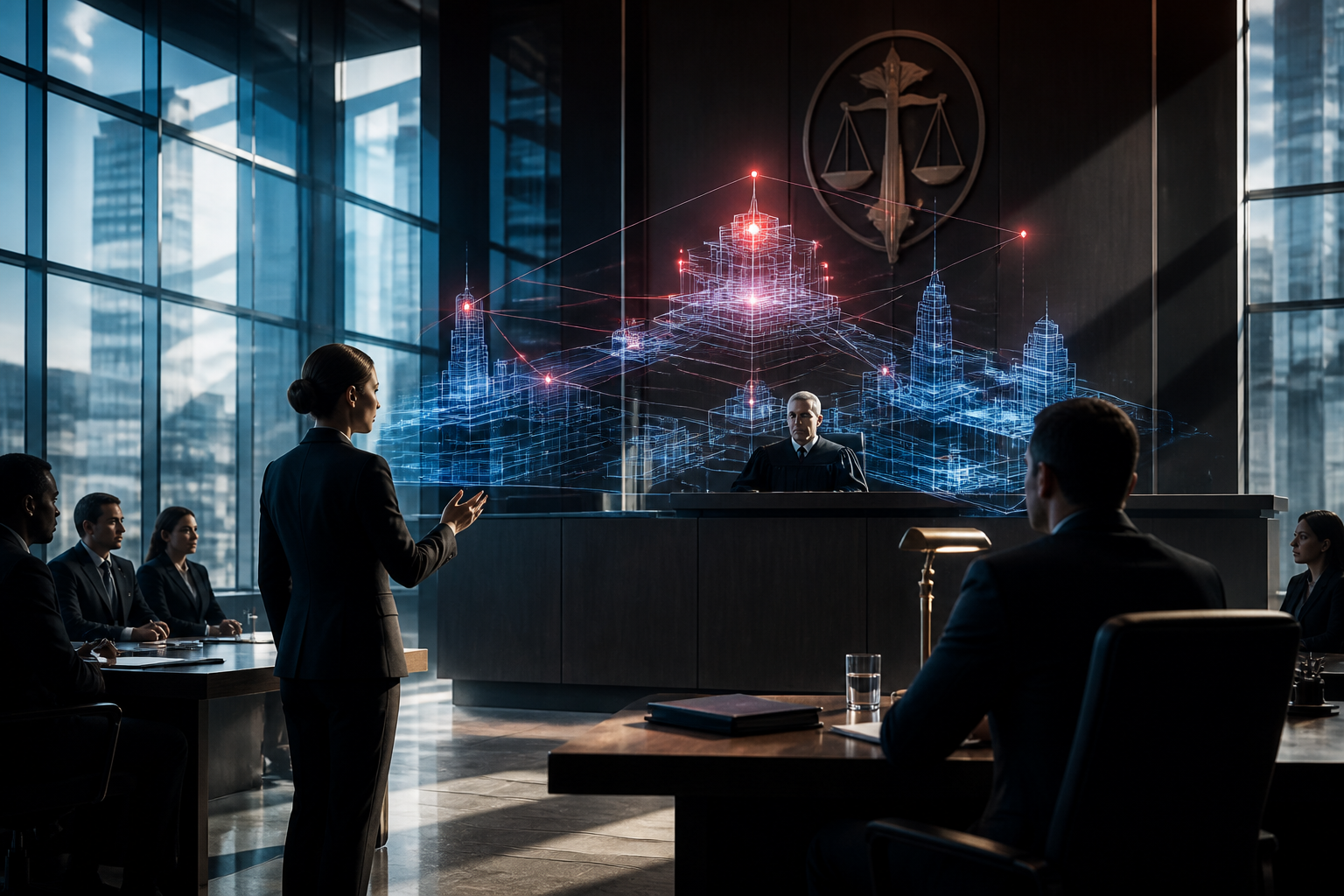
As generative AI becomes a staple in litigation, judges are shifting from curiosity to crackdowns. New standing orders in 2026 require specific technical proof of human-in-the-loop verification to avoid heavy sanctions.
The Transformation of Rule 11 in the Age of Large Language Models
The initial novelty of AI-generated legal briefs has long since evaporated, replaced by a rigid and often punitive regulatory environment within the federal and state court systems. By August 2026, the 'I didn't know the AI could lie' defense—which briefly gained traction following the Mata v. Avianca debacle in 2023—has been thoroughly dismantled. Today, the legal industry faces a landscape where Federal Rule of Civil Procedure 11 is being interpreted through the lens of technical due diligence. Courts now assume that every practitioner utilizes generative tools; the burden of proof has shifted to how those practitioners validated the output before submission.
We are currently seeing the emergence of 'Algorithmic Competence' as a baseline requirement for bar admission and standing in high-stakes litigation. Judges are no longer merely issuing stern warnings; they are imposing significant monetary sanctions, striking entire pleadings, and referring attorneys to disciplinary committees at the first sign of a hallucinated citation. This shift is driven by the realization that LLMs, while significantly more advanced in 2026 than their predecessors, still possess a non-zero probability of generating 'logical hallucinations'—errors that appear legally sound but are untethered to actual case law or statutory authority.
Case Study: The 2026 Standard for 'Reasonable Inquiry'
The landmark ruling in Stratton v. Nexus Logistics (March 2026) serves as the current North Star for AI liability. In this case, a senior associate at a top-tier firm relied on a custom-tuned internal model to draft a motion for summary judgment. The model successfully cited real cases but synthesized a 'majority rule' that did not exist in the relevant circuit. The presiding judge ruled that because the attorney could not produce a verification log—a digital trail showing that a human had cross-referenced the synthesized rule against a primary legal database—the firm had failed the 'reasonable inquiry' standard under Rule 11.
This decision catalyzed a wave of new standing orders across the Southern District of New York and the Northern District of California. These orders require a mandatory 'AI Disclosure and Verification Certificate' to be filed alongside every brief. Unlike the vague disclosures of 2024, these 2026 certificates require lawyers to list the specific Retrieval-Augmented Generation (RAG) systems used and affirm that every citation was checked against a certified 'ground truth' database like Westlaw or LexisNexis.
The Rise of Judicial Verification Software
It is not just the lawyers who have upgraded their toolsets. Clerks now utilize automated 'Brief Auditing' tools that instantly flag citations not found in the official record. These tools, often referred to as 'Bluebook Bots,' have turned the clerk's office into a high-speed verification hub. When a discrepancy is found, the system automatically generates an Order to Show Cause, putting the attorney on the defensive before the opposing counsel has even responded to the motion.
Institutionalizing the Human-in-the-Loop
The response from Big Law has been the institutionalization of the 'AI Auditor' role. Large firms have moved away from purely administrative paralegals toward specialized 'Legal Technologists' whose sole responsibility is to verify AI output. This professionalization of verification is a direct response to the increasing cost of malpractice insurance. In 2026, insurers such as ALAS (Attorneys' Liability Assurance Society) began offering lower premiums to firms that could demonstrate a 100% manual audit rate of AI-generated content.
The court does not prohibit the use of transformative technology; it prohibits the abdication of professional judgment to a stochastic process. An attorney who signs a brief produced by an algorithm without line-by-line verification is not practicing law—they are gambling with their client's rights and the court's time.
The Technical Gap: Why RAG and Fine-Tuning Are Not Enough
Despite the sophistication of 2026-era legal AI, the industry has hit a ceiling regarding reliability. Even with advanced RAG, which allows models to look up documents before answering, the 'reasoning' layer can still misinterpret the hierarchy of authority. For instance, a model might correctly retrieve a case but fail to realize it was vacated on other grounds, or it might conflate a dissenting opinion with the majority holding. These 'subtle hallucinations' are more dangerous than the blatant fabrications of 2023 because they require a high level of legal expertise to detect.
- Hierarchical Misinterpretation: AI models often struggle with the weight of persuasive versus mandatory authority across different jurisdictions.
- Statutory Drift: Models may rely on outdated versions of the U.S. Code if their training data cutoffs or RAG sources are not updated in real-time.
- Conceptual Conflation: The tendency of LLMs to merge similar legal doctrines (e.g., res judicata and collateral estoppel) in complex factual scenarios.
Global Regulatory Divergence
While U.S. courts focus on procedural sanctions, the European Union has taken a more prescriptive approach under the EU AI Act, which by 2026 is in full enforcement. In the EU, AI systems used in the 'administration of justice' are classified as High-Risk. This imposes strict data governance and transparency requirements on the software vendors themselves. Conversely, in the U.S., the burden remains almost entirely on the individual practitioner, creating a robust market for 'defensive legal tech'—software designed not to draft, but to catch the errors of the drafting AI.
This divergence has created challenges for multinational law firms. A brief prepared for a London court may require different AI documentation than one filed in Delaware. The result is a fragmented workflow where 'Local AI Rules' are as critical to follow as local court rules. We are seeing the emergence of 'AI Compliance Officers' within firms to navigate this jurisdictional minefield, ensuring that the firm's global output meets the most stringent local verification standards.
Preparing for the 2027 Judicial Cycle
As we look toward the next year, the trend is clear: the integration of AI in law is no longer a technological problem, but a professional conduct problem. The American Bar Association's 2025 updates to the Model Rules, specifically regarding the 'Duty of Technology Competence,' have now been adopted by nearly every state bar. Attorneys must now demonstrate not just that they checked the work, but that they possess a foundational understanding of how the AI arrived at its conclusion.
Firms that fail to adapt are finding themselves not just sanctioned, but uncompetitive. The 'efficient' firm of 2026 is not the one that uses AI to replace lawyers, but the one that uses AI to augment them while maintaining a rigorous, technology-enabled verification layer. The age of 'prompt and pray' is officially over; the age of 'trust but verify' has become the law of the land.
Key Takeaways
- →Courts now require specific 'Verification Certificates' detailing the human audit process for AI-generated filings.
- →Rule 11 'Reasonable Inquiry' now includes a technical component requiring proof of cross-referencing against primary databases.
- →Malpractice insurers are beginning to mandate AI audit protocols as a condition for coverage.
- →Judicial clerks are using automated 'Bluebook Bots' to identify hallucinations before motions are even heard.
- →EU AI Act enforcement has created a high-risk classification for legal AI, complicating international litigation workflows.
Frequently Asked Questions
What is the most common reason for AI-related sanctions in 2026?+
The primary cause is no longer fabricated cases, but 'logical hallucinations' where an AI correctly cites a real case but attributes a false legal principle or ruling to it. Courts view the failure to detect these errors as a breach of the duty of competence and a violation of Rule 11.
How can firms protect themselves from AI-driven malpractice claims?+
Firms must implement a multi-layered verification protocol that includes both technical safeguards (like RAG and automated citation checking) and mandatory human review by senior counsel. Documenting this 'verification trail' is essential for defending against potential sanctions or claims.
Do all courts require disclosure of AI use in 2026?+
While not universal, a majority of federal districts and many state courts have implemented standing orders. These range from simple disclosures to detailed certifications of human-in-the-loop verification. Lawyers must check local-local rules for every individual judge.
Is using AI for legal research considered 'unauthorized practice of law'?+
No, provided the AI is used as a tool by a licensed attorney. However, the 'unauthorized practice of law' (UPL) becomes an issue when non-lawyers use consumer-grade AI to generate legal documents without professional oversight, a trend that is seeing increased enforcement in 2026.
Continue reading
Found this useful?
Share it with your network.
Stay ahead of legal AI
Get our weekly briefing on AI for legal & contracts — read by 12,000+ general counsel and legal ops leaders.
Subscribe to the briefing