The Judicial Counter-Strike: How Courts Are Weaponizing Sanctions Against AI Hallucinations
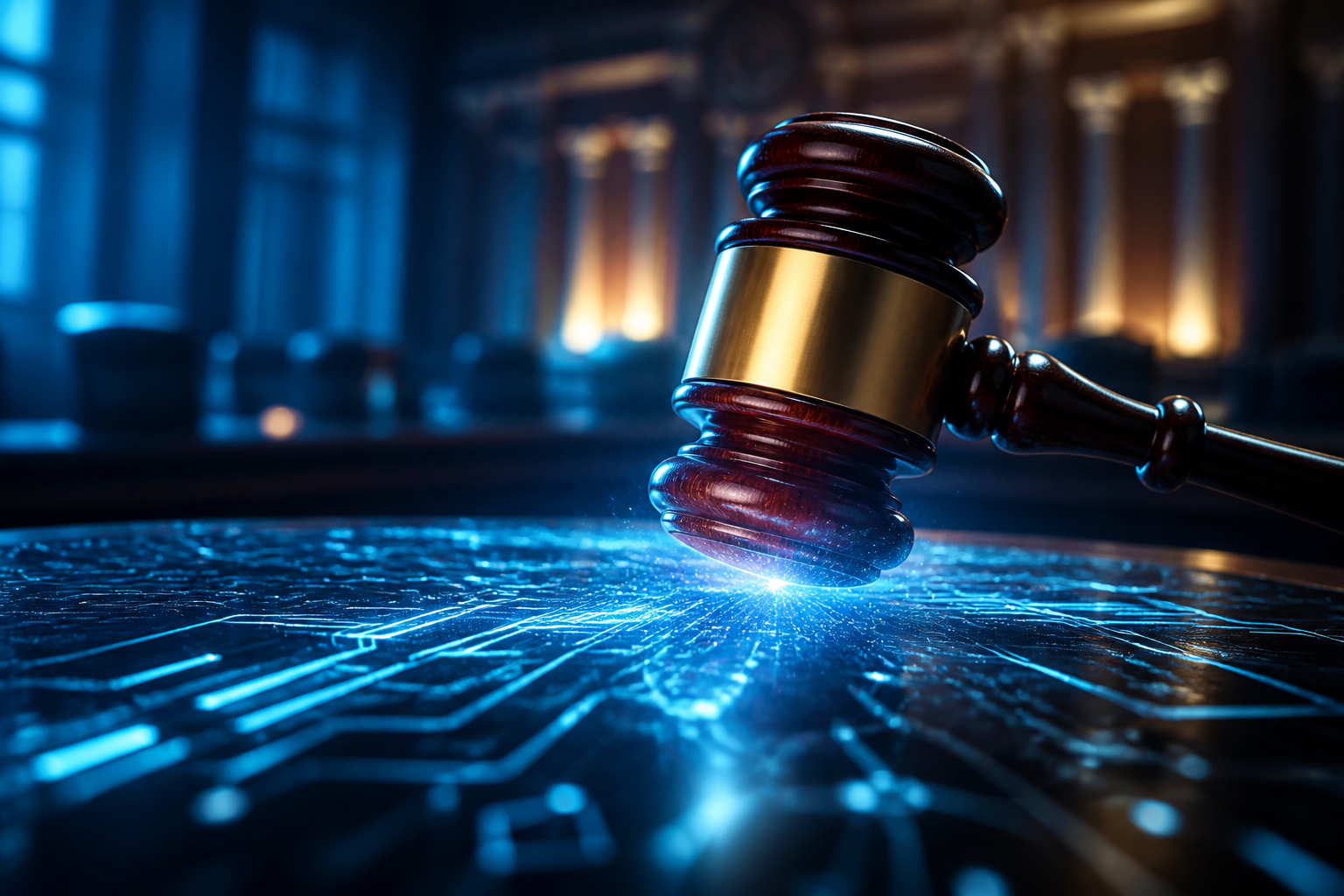
As federal courts move from cautionary standing orders to aggressive disciplinary sanctions, the legal industry faces a reckoning over the duty of tech supervision. This deep dive examines the shift from accidental error to sanctionable negligence in the era of LLM-generated briefs.
The Erosion of Judicial Patience for Synthetic Citations
By August 2026, the 'novelty' of generative AI in the courtroom has vanished, replaced by a rigid and often punitive regulatory framework. What began in 2023 with isolated incidents like Mata v. Avianca—where attorneys inadvertently submitted non-existent case law generated by ChatGPT—has evolved into a systemic challenge for the judiciary. Today, the grace period for 'technical illiteracy' has closed. Judges across the U.S. federal circuit and international high courts have transitioned from advisory warnings to the active enforcement of Rule 11 sanctions, holding human signatories strictly liable for every hallucinated syllable produced by their Large Language Models (LLMs).
The 2026 Standards of Technological Competence
The American Bar Association (ABA) updated its Model Rules of Professional Conduct specifically to address 'algorithmic supervision' in late 2025. This change codified what many district courts had already implemented: a mandatory certification process. In the current litigation environment, filing a brief often requires a signed declaration that all citations have been verified against an official reporter, specifically distinguishing between human-verified authorities and AI-suggested ones.
Case Study: The 2nd Circuit Crackdown
Earlier this year, the 2nd Circuit Court of Appeals issued a landmark ruling in Stacy v. United Tech Logistics. The court did not merely strike the offending brief but imposed a $50,000 fine on the firm, citing a 'reckless disregard for the integrity of the judicial process.' Unlike earlier cases where lawyers claimed ignorance of AI’s tendency to fabricate, the court ruled that by 2026, the risks of LLMs are 'notorious and foreseeable,' effectively raising the bar from simple negligence to bad faith for attorneys who fail to implement rigorous verification protocols.
The Rise of Judicial AI Disclosure Orders
The trend initiated by Judge Brantley Starr in the Northern District of Texas has now become a standard operating procedure. Currently, over 65% of federal district judges have standing orders requiring the disclosure of generative AI usage in drafting. However, the 2026 versions of these orders are more granular. They require counsel to identify which specific platforms were used—be it Harvey, Loom, or Westlaw Precision—and the specific prompts used to generate legal arguments.
- Mandatory disclosure of AI involvement in any substantive legal analysis.
- Requirement for a 'Human-in-the-Loop' (HITL) certification for every citation.
- Increased scrutiny of 'boilerplate' language that reflects LLM-specific linguistic patterns.
- Potential for sua sponte show-cause orders when judges detect 'synthetic-style' reasoning.
The duty of candor toward the tribunal is not divisible. An attorney cannot outsource their conscience or their license to a black-box algorithm and then plead ignorance when the output pollutes the record. The machine is the tool; the lawyer is the guarantor.
Vendor Liability and the Shift to RAG Architecture
The legal tech market has reacted to this punitive environment by pivoting away from general-purpose LLMs toward Retrieval-Augmented Generation (RAG). Modern platforms now highlight 'groundedness' scores, showing exactly which paragraph of a verified case file supports each AI-generated sentence. This technological shift is a direct response to the massive malpractice insurance premiums currently being levied against firms that cannot prove they use 'Legal-Grade AI' with built-in hallucination checks.
Despite these advancements, the 'arms race' continues. As AI models become more sophisticated, their hallucinations become more subtle. In the recent Commonwealth v. Aris matter, the AI did not invent a case name; instead, it accurately cited a real case but subtly altered the holding to favor the defendant. This 'semantic hallucination' represents the next frontier of judicial concern, necessitating a level of line-by-line scrutiny that many fear will erode the efficiency gains AI was supposed to provide.
International Perspectives: The EU AI Act Influence
While U.S. courts rely on Rule 11 and standing orders, the European Union has integrated legal AI oversight into the enforcement of the EU AI Act. Law firms operating in Brussels or Paris are now classified as 'high-risk' users of AI when utilizing the technology for legal interpretation. This requires them to maintain detailed logs of AI usage, which must be available for audit by judicial authorities. The divergence between the U.S. 'sanction-based' model and the EU 'compliance-based' model is creating a complex landscape for global law firms.
The Future of Professional Responsibility
Moving forward, the focus is shifting from 'if' AI is used to 'how' it is audited. Law firms are increasingly appointing 'Chief AI Officers'—not just to implement the tech, but to oversee the internal 'adversarial testing' of all outbound work product. The 2026 legal landscape is one where the efficiency of AI is heavily taxed by the necessity of human verification. In this environment, the most valuable asset a lawyer possesses is no longer their ability to find the law, but their ability to vouch for it.
Key Takeaways
- →Federal courts have moved from cautionary warnings to significant monetary sanctions for AI-generated hallucinations.
- →The 'duty of technological competence' now includes a specific mandate for 'algorithmic supervision' under ABA guidelines.
- →Retrieval-Augmented Generation (RAG) has become the industry standard to mitigate hallucination risks in legal tech.
- →Global firms must navigate a split between U.S. judicial sanctions and the EU's high-risk AI compliance audits.
- →Judges are increasingly issuing standing orders requiring the disclosure of specific prompts used in legal drafting.
Frequently Asked Questions
What is the primary legal basis for sanctioning AI-generated errors?+
In the United States, Rule 11 of the Federal Rules of Civil Procedure is the primary tool. It requires attorneys to certify that to the best of their knowledge, legal contentions are warranted by existing law. Since the attorney signs the brief, they are legally responsible for its contents, regardless of whether a human or an AI wrote it.
Are there specific AI tools that are now banned by courts?+
Courts generally do not ban specific tools but rather mandate their responsible use. However, using general-purpose LLMs like GPT-4 without specialized legal layers (like those provided by Westlaw or LexisNexis) is increasingly viewed as a failure of due diligence in complex litigation.
How can law firms avoid 'semantic hallucinations'?+
Firms should adopt RAG-based systems that provide 'pinpoint citations' for every claim. Furthermore, implementing a 'two-person' verification rule—where a second human attorney must manually check every case citation against an official reporter—remains the only foolproof method to avoid sanctions.
Does disclosing AI use bias a judge against the merits of a case?+
While concerns about 'algorithmic bias' in the judiciary exist, most judges view transparency as a sign of professional competence. Failure to disclose when required by a standing order is viewed far more unfavorably and is more likely to result in adverse rulings than the disclosure itself.
Continue reading
Found this useful?
Share it with your network.
Stay ahead of legal AI
Get our weekly briefing on AI for legal & contracts — read by 12,000+ general counsel and legal ops leaders.
Subscribe to the briefing