The Liabilities of Autonomy: Navigating the 2026 Legal AI Malpractice Landscape
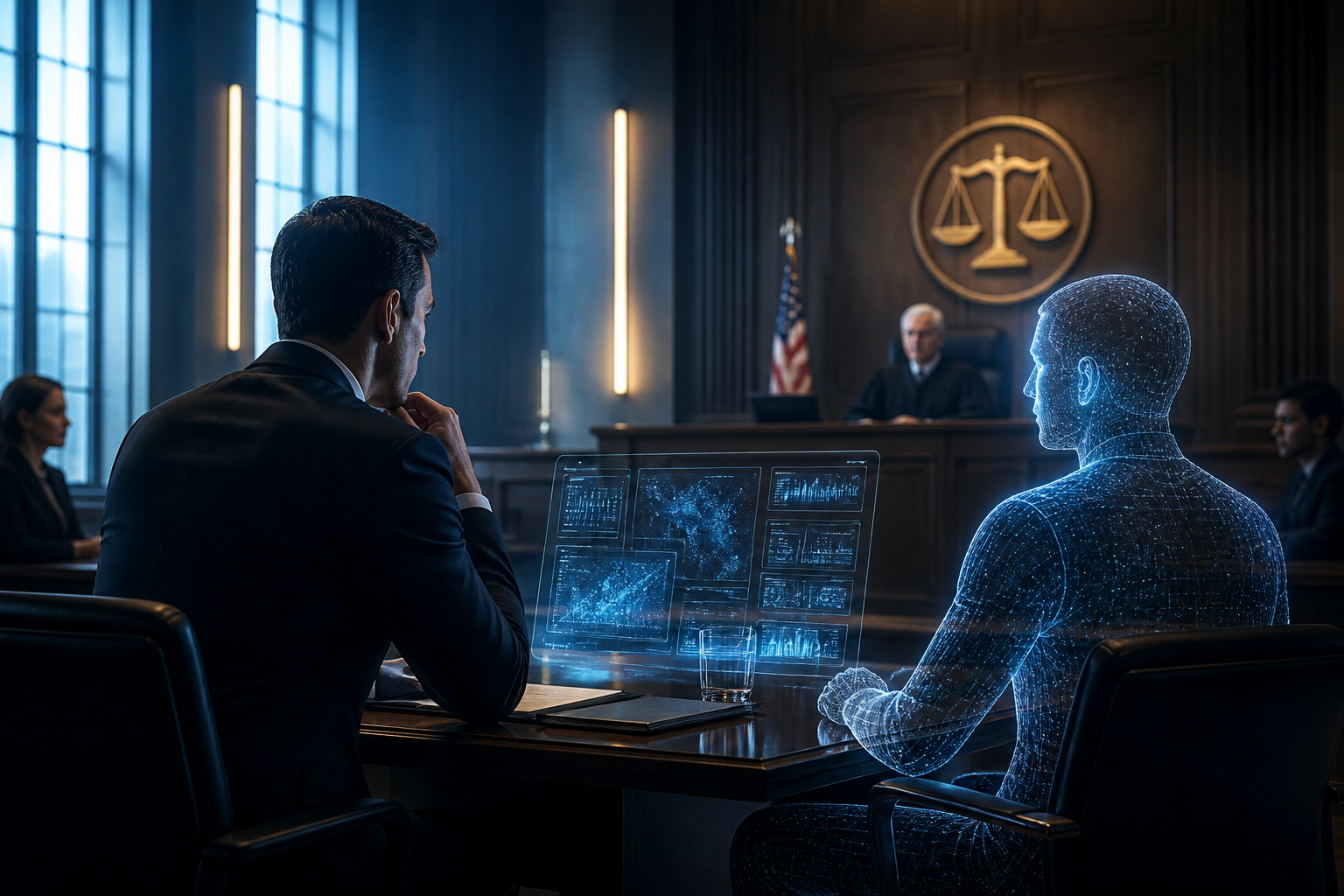
As autonomous AI agents move from experimental assistants to independent legal researchers, the industry faces a reckoning over professional liability. New precedents are emerging that shift the burden of proof from 'human error' to 'algorithmic negligence.'
The Shift from Augmentation to Autonomy
By July 2026, the legal industry has moved past the 'chatbot' era and into the age of autonomous agentic workflows. Tools like Harvey AI, CoCounsel by Thomson Reuters, and specialized boutique platforms like Luminance have evolved from simple query-response interfaces into systems capable of executing multi-step legal strategies with minimal human instruction. This evolution has brought the industry to a critical inflection point regarding legal AI liability. The fundamental question is no longer whether AI can perform legal work, but who bears the professional and financial consequences when an autonomous system breaches the standard of care. Recent disciplinary actions in California and New York suggest that the 'human-in-the-loop' defense is becoming increasingly difficult to maintain as systems become more opaque.
Redefining the Standard of Care and ABA Model Rule 1.1
The American Bar Association's updated guidance on Model Rule 1.1 (Competence) has formally integrated technological proficiency with a specific focus on generative workflows. In 2026, the standard of care is no longer measured against a lawyer who manually researches every case, but against a 'reasonably prudent lawyer utilizing advanced diagnostic tools.' This shift creates a paradoxical liability trap: firms may be found negligent for failing to use AI to find a needle-in-a-haystack precedent, yet they remain strictly liable if that same AI hallucinates a procedural requirement. The 2025 case of Mata v. Avianca cited years prior was merely a harbinger; today's litigation focuses on 'prompt negligence'—the failure of a senior associate to provide sufficient constraints to an autonomous drafting agent.
The Rise of Algorithmic Due Diligence
Insurance carriers specializing in Professional Liability Insurance (PLI) for law firms have begun requiring 'algorithmic due diligence' reports. Firms must now demonstrate not just that they have an AI policy, but that they have conducted technical audits of the Large Language Models (LLMs) they employ. This includes evaluating the training data cut-off dates and the specific RAG (Retrieval-Augmented Generation) architectures used by their vendors. If a firm utilizes an unvetted open-source model like a fine-tuned Llama 4 variant for client work without proper fine-tuning logs, they risk a total denial of coverage in the event of a malpractice claim.
Corporate Legal Departments and Indemnification Wars
The power dynamic between Big Law and General Counsel is shifting toward aggressive indemnification. Fortune 500 companies are increasingly inserting clauses into engagement letters that demand law firms indemnify the client for any regulatory fines or litigation losses stemming from AI-generated errors. This is particularly prevalent in the EU AI Act era, where 'High-Risk AI Systems' used in legal settings are subject to strict transparency requirements. When a firm's AI misinterprets an ESG disclosure regulation, the financial fallout can reach into the hundreds of millions, far exceeding the typical caps on traditional legal malpractice policies.
The legal profession is currently navigating a 'Liability Gap' where the speed of AI deployment has outpaced the judicial system's ability to define what constitutes reasonable supervision in an autonomous environment.
Judicial Oversight and the Proactive Bench
Federal and State courts have moved beyond the 'AI Disclosure' standing orders seen in 2023 and 2024. Judges are now exercising 'technological gatekeeping' under modified Daubert standards. In a recent ruling in the Southern District of Texas, a judge struck a motion for summary judgment in its entirety because the moving party could not certify the 'veracity and deterministic consistency' of the AI agent used to extract facts from the discovery corpus. This suggests that the bench is no longer satisfied with the lawyer's signature as a proxy for truth; they are demanding a technical audit trail of the AI's reasoning process, often referred to as 'Chain of Thought' auditing.
The Threat of Proprietary Sanctions
One of the most significant risks emerging this year is the rise of 'systemic sanctions.' If an AI platform used by a Tier 1 law firm is found to have a baked-in bias or a recurring hallucination pattern, every case handled by that firm using that specific version of the software could be subject to reopening or collateral attack. This has led to the emergence of 'Shadow AI Compliance' teams within firms, whose sole job is to monitor the 'drift' of their internal models against a set of controlled legal benchmarks. The stakes are survival; a single systemic error could bankrupt a mid-sized firm through a class-action malpractice suit brought by disgruntled clients.
Future-Proofing the Autonomous Law Firm
To mitigate these risks, the leading firms of 2026 are adopting 'Hyper-Supervision' models. This involves the use of a second, independent 'Auditor AI' whose only purpose is to find errors in the work produced by the 'Drafting AI.' By creating a competitive digital ecosystem where one system is incentivized to find the flaws of the other, firms can provide the necessary level of oversight that human associates, currently overwhelmed by the sheer volume of AI-generated content, simply cannot provide. Furthermore, the integration of Blockchain-based versioning for legal documents is becoming standard, providing an immutable record of exactly which human and which AI version touched a document at every stage of its creation, effectively solving the 'attribution of error' problem that has plagued recent malpractice defense strategy.
Key Takeaways
- →The 'human-in-the-loop' defense is weakening as AI agents gain more autonomy.
- →Insurance carriers now require 'algorithmic due diligence' before issuing malpractice coverage.
- →Indemnification clauses in engagement letters are becoming a central point of negotiation between firms and corporate clients.
- →Judges are increasingly demanding 'Chain of Thought' audit logs for AI-assisted filings.
- →Hyper-supervision via 'Auditor AI' is the new gold standard for error mitigation.
Frequently Asked Questions
Can a law firm be held liable for an error made by an AI vendor's software?+
Yes. Following recent updates to ABA Model Rule 5.3 regarding non-lawyer assistance, the primary responsibility for the work product remains with the lawyer. Unless the error is due to a documented 'black box' system failure that the vendor explicitly warranted against, the firm is generally liable for the output it presents to a court or client.
What is 'prompt negligence' in a legal context?+
Prompt negligence refers to a breach of the duty of care by providing inadequate, inaccurate, or biased instructions to a generative AI system. If a lawyer fails to include critical facts or jurisdictional constraints in a prompt, leading to a flawed legal outcome, it is considered a failure of supervision and technical competence.
How does the EU AI Act affect U.S.-based law firms?+
Any U.S. firm with operations in the EU or advising EU-based clients must comply with the Act's transparency and risk management requirements. If a firm uses AI to 'provide legal services' in a way that could affect fundamental rights, it may be classified as a High-Risk system, requiring extensive documentation and bias testing.
Will malpractice insurance premiums increase because of AI?+
In the short term, firms that cannot demonstrate rigorous AI oversight protocols are seeing premium hikes of 15–20%. However, firms that use validated 'Auditor AI' systems and maintain strict audit trails are beginning to see 'automation discounts' as their overall risk of human-led clerical error decreases.
Continue reading
Found this useful?
Share it with your network.
Stay ahead of legal AI
Get our weekly briefing on AI for legal & contracts — read by 12,000+ general counsel and legal ops leaders.
Subscribe to the briefing