The New Malpractice Frontier: Defining the Standard of Care for Generative AI in Law
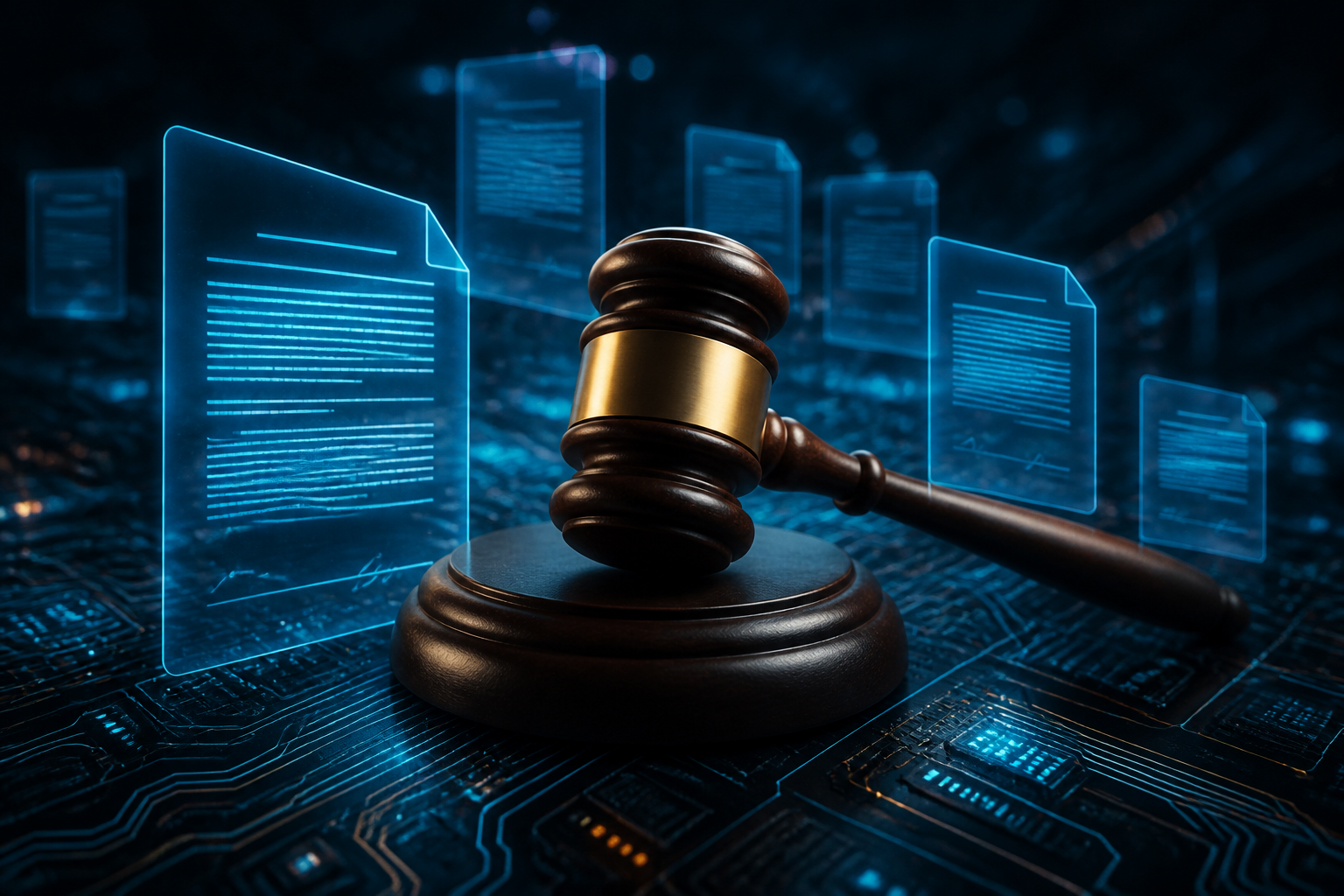
The legal profession has moved beyond early adoption into a period of high-stakes accountability. Courts are no longer just penalizing 'hallucinations'; they are establishing a new baseline for what constitutes competent representation in an AI-integrated firm.
The Shift from Novelty to Necessity: The Courts Respond
By July 2026, the discussion surrounding generative AI in the legal sector has shifted from excitement over productivity gains to the sobering reality of professional liability. The era of the 'clueless practitioner'—the attorney who accidentally cites non-existent case law fabricated by an LLM—has largely been replaced by more complex malpractice challenges. Today, the focus is on systemic failures in AI oversight and the erosion of the Duty of Technology Competence. As state bars across the U.S. finalize their 2026 updates to ethical guidelines, a clear consensus is emerging: using AI is no longer optional for maintaining efficiency, but using it without a robust verification framework is a fast track to disbarment.
The Maturation of the Technologically Competent Lawyer
For years, the American Bar Association (ABA) Model Rule 1.1, Comment 8, served as a gentle reminder that lawyers should keep abreast of the changes in the law and its practice, including the benefits and risks associated with relevant technology. However, in light of the landmark 2025 ruling in Estate of Miller v. Global Tech Counsel, the definition of 'relevant technology' has solidified. In that case, the California Superior Court found that a firm's failure to utilize advanced AI-driven discovery tools—which resulted in the omission of a critical evidence chain—constituted a breach of the standard of care. The court argued that as technology becomes the industry standard, failure to use it to protect a client's interest is as negligent as failing to use a search engine for legal research in 2010.
In 2026, we are seeing the reverse of the 'Mata v. Avianca' phenomenon. It is no longer just about the errors the AI makes, but about the human lawyer's failure to intervene. Firms are now being audited not just for their output, but for their 'Verification Logs.' These logs, often managed through platforms like Harvey or CoCounsel, serve as chronological proof that a human attorney validated every AI-generated claim against primary sources. The legal industry has moved toward a 'Trust but Verify' mandate that is being codified in state bar opinions from New York to California.
The Risk of the 'Black Box' and Delegated Authority
One of the most pressing concerns in mid-2026 is the delegation of legal reasoning to non-transparent algorithms. Many mid-sized firms have adopted white-label AI solutions that promise to 'automate' routine litigation tasks. However, when these systems lean on proprietary weights that prioritize certain precedents over others without explaining why, the lawyer loses the ability to perform their core duty: independent professional judgment.
Supervisory Liability Under Rules 5.1 and 5.3
The ABA's Standing Committee on Ethics and Professional Responsibility recently issued Formal Opinion 515 (released early 2026), which explicitly ties the use of AI to the duty of supervision. Under Rules 5.1 and 5.3, partners are now held vicariously liable for 'hallucinated' filings or biased algorithmic outputs generated by their associates or third-party AI vendors if they failed to implement reasonable remedial measures. This has led to the rise of 'Chief AI Officers' within AMLAW 100 firms, specifically tasked with ensuring that the firm's tech stack complies with evolving ethical firewall requirements.
The standard of care in 2026 is not perfection; it is a demonstrable protocol of human-in-the-loop oversight. An attorney who submits a document without tracing every AI-generated conclusion back to a verified case reporter is effectively playing Russian roulette with their license.
Insurance Carriers and the 'AI Premium'
Professional liability insurers, such as ALPS and CNA, have fundamentally restructured their policies in the last 12 months. In 2024 and 2025, firms were often asked a single question regarding AI usage on their renewal forms. Today, those forms include multi-page addendums requiring firms to disclose their AI vendor list, their data encryption standards, and their internal training curriculum. Some carriers have even begun offering lower premiums to firms that utilize 'closed-loop' AI systems—those which do not train on client data and are restricted to a defined universe of verified legal databases like Westlaw or LexisNexis.
Conversely, the 'AI Premium' is becoming a reality for firms that continue to use general-purpose, consumer-grade LLMs for legal work. Insurers view the lack of data sovereignty and the higher halluncination rates of these generalized models as an unquantifiable risk. This economic pressure is doing more to change lawyer behavior than the threat of court sanctions ever did, forcing even the most tech-averse practitioners to upgrade to enterprise-grade, legally-tuned AI tools.
Looking Ahead: The Codification of AI Competence
As we move into the latter half of 2026, the legal industry is anticipating a series of Supreme Court-level reviews regarding the 'Unauthorized Practice of Law' (UPL) by non-human entities. While the profession has successfully lobbied to keep AI from appearing in court as 'counsel,' the line between a tool and a practitioner is blurring. The focus for firms must remain on the three pillars of 2026 AI Ethics: Transparency with clients about AI usage, rigorous Verification of all machine-generated content, and absolute Data Privacy.
The standard of care is no longer a static definition found in a textbook; it is a dynamic target that evolves with every software update. The lawyers who will thrive are those who view AI as a sophisticated assistant that requires constant, expert supervision, rather than a replacement for the intellectual rigors of the law.
Key Takeaways
- →Duty of Technology Competence (Rule 1.1) now explicitly requires verification logs for all AI-generated legal work.
- →Rule 5.1 and 5.3 are being invoked to hold law firm partners liable for algorithmic errors made by their associates or software.
- →Professional liability insurers are now mandating the use of 'closed-loop' legal AI over consumer-grade models to maintain coverage.
- →Court precedents in 2025 and 2026 have established that failing to use AI for massive data analysis tasks may itself be a form of negligence.
- →Transparency with clients regarding the extent of AI involvement in their matters is becoming a mandatory disclosure in several jurisdictions.
Frequently Asked Questions
Can a lawyer be disbarred for a single AI hallucination in 2026?+
While a single error may lead only to sanctions or a reprimand, disbarment is increasingly on the table if there is evidence of a systematic failure to review AI output, or if the lawyer attempted to deceive the court regarding the use of AI tools. Courts now distinguish between 'accidental errors' and 'reckless lack of oversight.'
What is the 'Verification Log' mentioned by legal experts?+
A Verification Log is a record-keeping practice where an attorney documents the primary sources (statutes, cases, regulations) used to validate the accuracy of an AI-generated draft. Many enterprise legal AI tools now generate these logs automatically to help firms build a 'due diligence' defense against potential malpractice claims.
Does using AI reduce my billable hours in a way that risks my firm's profitability?+
While AI reduces the time spent on initial drafting and research, firms are shifting toward value-based billing or higher hourly rates for 'expert review.' Failing to use AI to save time for a client could be viewed as a breach of the duty to charge reasonable fees (Rule 1.5) if the task could have been done more efficiently.
How do malpractice insurers know if a firm is using consumer-grade AI?+
Insurers now conduct 'cyber-audits' and require disclosure of all third-party software integrations. If a firm suffers a data breach or files a claim based on an error from an undisclosed, non-compliant AI tool, the insurer may have grounds to deny the claim based on misrepresentation in the application.
Continue reading
Found this useful?
Share it with your network.
Stay ahead of legal AI
Get our weekly briefing on AI for legal & contracts — read by 12,000+ general counsel and legal ops leaders.
Subscribe to the briefing