The New Standard of Care: How AI Liability is Redefining Legal Malpractice in 2026
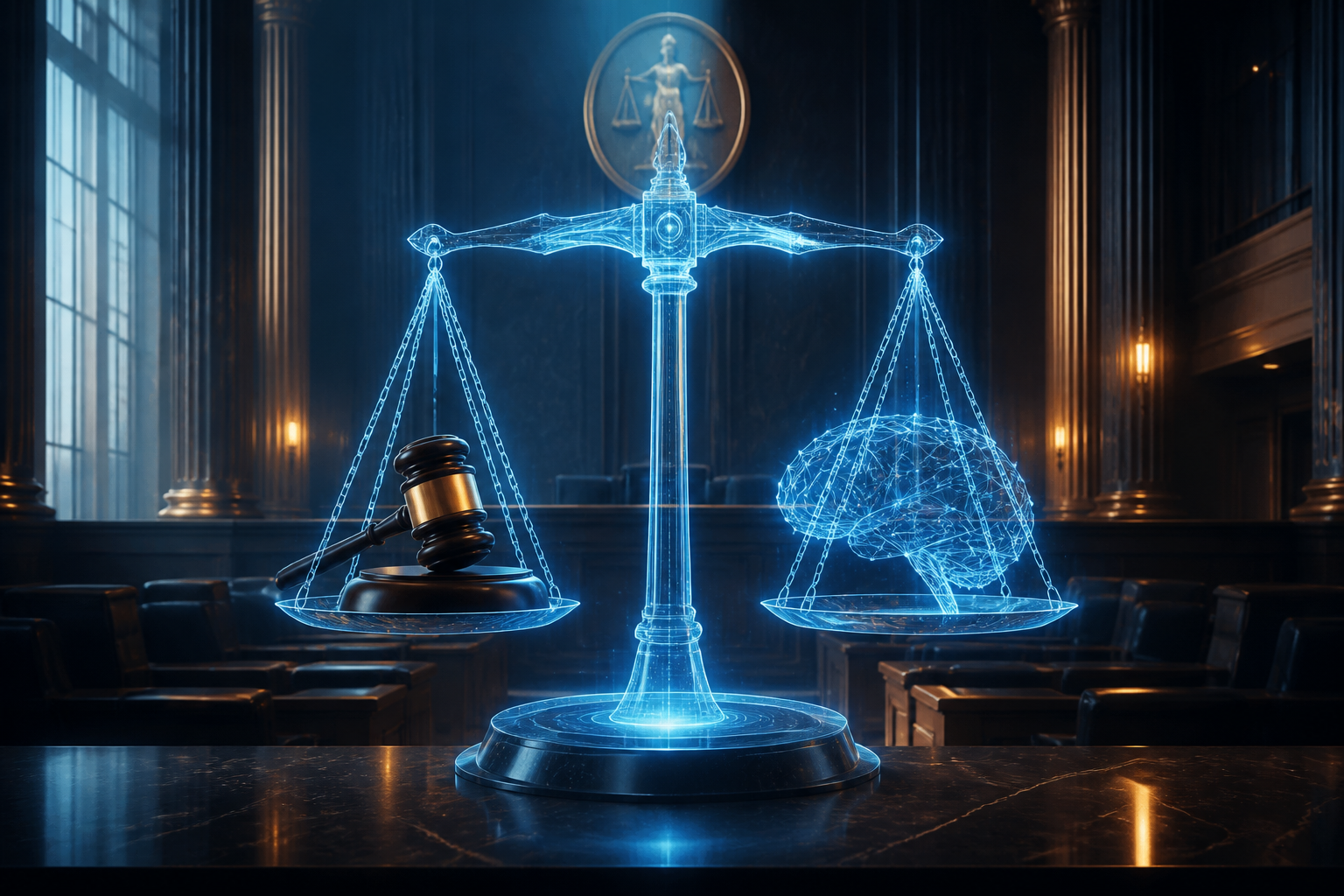
As autonomous AI agents move from experimental tools to core legal infrastructure, the judiciary is setting a higher bar for technical competency. Recent rulings suggest that failing to use AI may soon be as negligent as failing to use a computer in 1995.
The Shift from Experimental Use to Mandatory Competence
By August 2026, the legal industry has moved past the 'wild west' phase of generative AI experimentation. What began as a series of cautionary tales regarding hallucinations—most notably the 2023 Mata v. Avianca case—has matured into a complex web of regulatory frameworks and judicial expectations. The central question facing the American Bar Association (ABA) and state disciplinary committees today is no longer whether AI should be used, but whether a lawyer's failure to utilize high-performing AI tools constitutes a breach of the duty of competence. As Harvey and CoCounsel become ubiquitous in Big Law, the gap between AI-enabled efficiency and manual traditionalism is creating a friction point that courts are now labeling 'algorithmic negligence.'
Redefining Model Rule 1.1: Technical Competence in the Agentic Era
The ABA's Standing Committee on Ethics and Professional Responsibility has spent the last year refining the comments to Model Rule 1.1. In its 2025 formal opinion, the committee clarified that the duty to provide competent representation includes an obligation to understand the benefits and risks associated with relevant technology. However, the 2026 landscape introduces 'agentic' workflows—AI systems that don't just draft text but execute multi-step legal tasks autonomously. For firms using tools like Luminance for M&A due diligence, the standard of care now mandates a level of 'explainability.' If an AI misses a change-of-control clause in a 5,000-document set, the attorney cannot simply blame the black box.
The Duty of Supervision for Non-Human Entities
State bars in California and New York have recently updated their versions of Model Rule 5.3, which governs the supervision of non-lawyer assistants. These updates explicitly include 'autonomous algorithmic assistants' under the umbrella of entities that require direct supervision. The liability shield for lawyers is thinning; the standard of 'reasonable care' now requires proof of a human-in-the-loop validation process. This has led to the rise of 'AI Audit Logs' as a primary piece of evidence in legal malpractice defense, showing exactly when and how a human attorney reviewed the AI-generated output.
Judicial Trends: The Death of the 'AI Excuse'
Trial courts are increasingly intolerant of errors attributed to AI systems. In a landmark ruling earlier this year, a federal judge in the Southern District of New York sanctioned a mid-sized firm not just for a hallucinated citation, but for failing to disclose the use of a non-enterprise grade LLM in a sensitive patent litigation matter. The court held that the use of consumer-grade chatbots for legal research, without the retrieval-augmented generation (RAG) safeguards found in professional tools like Lexis+ AI or Westlaw Precision, is inherently reckless.
The legal profession is entering an era where the absence of AI is more of a liability than its presence. Just as we once moved from physical law libraries to digital databases, we are now moving from manual document review to AI-verified analysis. The standard of care is a moving target, and it is currently accelerating.
Insurance and Malpractice Premiums: The Economic Driver
Professional liability insurers, such as ALAS and CNA, have begun adjusting premiums based on a firm's AI tech stack and governance policies. By mid-2026, many carriers are requiring firms to complete 'AI Risk Assessments' as part of their renewal process. Firms that lack a formal AI Use Policy or fail to provide training on prompt engineering and hallucination detection are seeing premium hikes of up to 20%. Conversely, firms that can demonstrate a rigorous 'verification-first' workflow are benefiting from more favorable terms, as data shows these firms are less likely to miss critical deadlines or overlook conflicting case law.
The Cost of Efficiency: Billing and Ethical Dilemmas
The intersection of AI liability and the billable hour remains a contentious topic. If an AI can complete a task in 30 seconds that previously took an associate 10 hours, the standard of care requires that the task be done both accurately and efficiently. Clients are increasingly auditing invoices for 'inefficient manual labor' that should have been automated. This puts firms in a precarious position: if they don't use AI, they are accused of inefficiency; if they use AI and it makes a mistake, they are accused of malpractice. The solution emerging in 2026 is the adoption of 'value-based pricing' models that decouple the standard of care from the time spent on a task.
Conclusion: Navigating the Algorithmic Frontier
As we look toward 2027, the line between human judgment and machine intelligence will continue to blur. The duty of competence has evolved into a duty of 'hybrid intelligence,' where the lawyer acts as a sophisticated conductor of various AI instruments. The firms that survive this transition are those that treat AI not as a shortcut, but as a rigorous extension of their professional duties. In the eyes of the court, the 'reasonable attorney' of 2026 is one who is as fluent in the limitations of large language models as they are in the rules of civil procedure.
Key Takeaways
- →Model Rule 1.1 now practically necessitates technical competence in generative AI and agentic workflows.
- →Courts distinguish between professional-grade RAG systems and consumer-grade chatbots when determining negligence.
- →Insurance carriers are beginning to link malpractice premiums to the quality of a firm's AI governance and audit logs.
- →The duty of supervision under Rule 5.3 has been expanded to include autonomous AI agents as 'non-lawyer assistants.'
- →Failing to use AI for high-volume tasks like document review may soon be considered a breach of the duty of efficiency.
Frequently Asked Questions
Can I be sued for malpractice if my AI assistant hallucinates a case?+
Yes. Under the principle of 'superior respondeat' and updated ethical guidelines, the attorney of record is ultimately responsible for every word filed. Using AI does not shift liability to the software vendor; it remains with the signing lawyer who failed to verify the output.
Is it mandatory to disclose AI use to my clients in 2026?+
Generally, yes. Most state bar associations now recommend or require disclosure if AI significantly impacts the drafting of core work product or if the AI use affects billing. Many engagement letters now include specific AI-use clauses to manage client expectations.
Do I need to keep logs of my AI prompts for court evidence?+
While not strictly required by law yet, keeping an 'AI Audit Log' is becoming a best practice for malpractice defense. It proves you exercised 'due diligence' by showing the iterative prompts and the verification steps taken by a human lawyer.
How does AI impact the 'reasonable lawyer' standard?+
The 'reasonable lawyer' is a peer-based standard. As the majority of law firms adopt AI for tasks like legal research and contract analysis, the standard of care shifts. If most lawyers use AI to catch errors, those who don't may be found negligent for missing those same errors.
Continue reading
Found this useful?
Share it with your network.
Stay ahead of legal AI
Get our weekly briefing on AI for legal & contracts — read by 12,000+ general counsel and legal ops leaders.
Subscribe to the briefing