The Privilege Crisis: How Generative AI Work Product is Redefining Legal Discovery
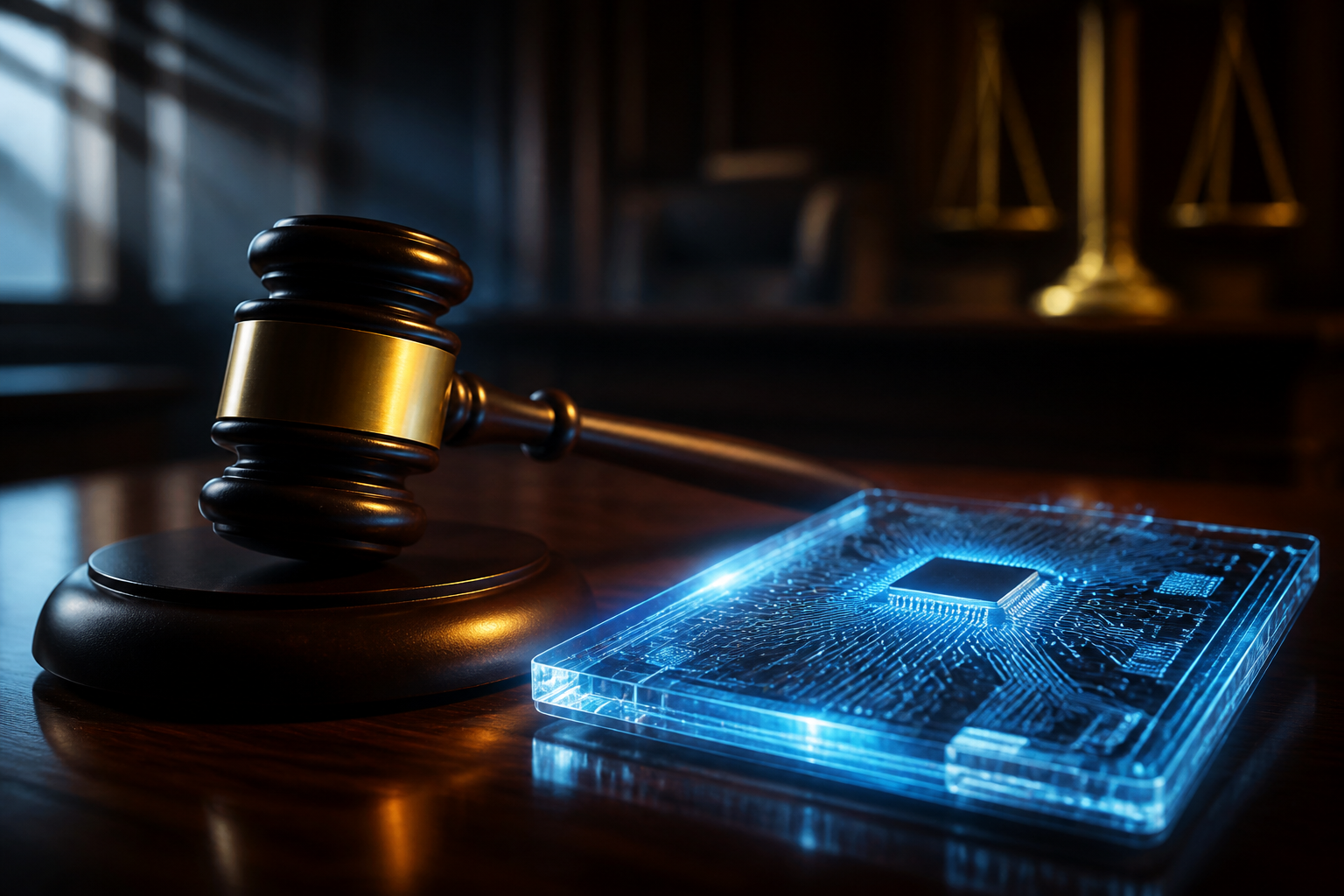
As law firms shift from research tools to autonomous agentic workflows, the line between human strategy and machine-generated data is blurring. A wave of new rulings is forcing a total reconsideration of attorney-client privilege in the age of large language models.
The Erosion of the Traditional Shield in the Era of Agentic Legal AI
By July 2026, the global legal landscape has transitioned away from basic chatbots to sophisticated, agentic AI systems capable of drafting complete deposition outlines, identifying litigation triggers, and autonomously managing document review. However, this increased efficiency has birthed a profound jurisdictional crisis: the vulnerability of attorney-client privilege. As firms integrate tools like Harvey and CoCounsel deeper into their strategic cores, a series of contentious discovery motions in the Delaware Court of Chancery and the Southern District of New York (SDNY) are challenging whether 'AI-generated thoughts' constitute protected attorney work product. The central tension lies in whether an algorithm—no matter how customized—can be considered an extension of the attorney's mind or merely a third-party processor that lacks the inherent protection of the bar.
Defining the 'Mechanical Intermediary' Problem
In the landmark 2025 case Vanderbilt v. TechNexus Corp, the presiding judge ruled that prompts sent to a publicly available LLM did not carry an expectation of privacy, effectively waiving privilege for any data leaked during the session. However, the 2026 landscape is more nuanced. Law firms now use private, VPC-hosted instances of models from Anthropic and OpenAI. Despite this technical isolation, the United States v. Miller (2026) ruling suggested that if an AI tool autonomously identifies a new legal theory or relevant document without specific human prompts, that output might not satisfy the 'prepared in anticipation of litigation by or for another party or its representative' requirement of Federal Rule of Civil Procedure 26(b)(3).
The argument currently being debated in federal appellate courts is whether these systems function as 'mechanical intermediaries' or 'independent creators.' If the court views the AI as a third-party service provider rather than a digital paralegal, the waiver of privilege becomes a terrifying reality for major litigation teams who have automated their early-stage case assessments.
The 2026 Discovery Landscape: Prompt Engineering as Evidence
Opposing counsels are increasingly filing motions to compel the production of 'prompt logs' and 'model parameters' used during document review. They argue that understanding how an AI filtered 10 million documents for relevance is not a matter of legal strategy, but a matter of technical process subject to scrutiny. This move treats the AI’s internal logic as a 'black box' that must be opened to ensure the fairness of the discovery process. Major firms, including Latham & Watkins and Kirkland & Ellis, have responded by implementing 'Privilege by Design' frameworks, where every AI interaction is tagged with human-oversight metadata to prove the attorney's guiding hand.
Standardizing the Human-in-the-Loop Requirement
- Requirement of 'Substantial Human Modification' before an AI draft is considered protected work product.
- Mandatory logging of attorney oversight for every autonomous agent session used in litigation.
- The adoption of the 'Digital Clerk' legal fiction, where AI is treated under the law as a non-lawyer employee for privilege purposes.
- Use of 'clean room' AI environments to prevent data leakage between different client matters within a single model.
Expert Perspectives on the Digital Shield
We are approaching a singularity where the distinction between an attorney's mental impressions and an AI’s predictive output becomes invisible. If the law fails to recognize AI as an extension of the attorney’s toolkit, we are essentially penalizing efficiency and inviting a discovery free-for-all that undermines the adversarial system.
This sentiment, echoed by legal technology analysts at the American Bar Association (ABA), highlights the urgent need for a formal update to the Model Rules of Professional Conduct. Specifically, Rule 1.6 (Confidentiality of Information) was never drafted with the concept of a self-improving neural network in mind. By mid-2026, several state bars, led by California and New York, have issued formal ethics opinions stating that while AI usage is permitted, the 'non-delegable duty' of supervision means that unverified AI output can never be claimed as privileged work product.
Global Variations: The EU AI Act vs. US Common Law
While U.S. courts grapple with common law interpretations, the European Union's AI Act—fully in force as of 2026—provides a different hurdle. High-risk AI systems used in the 'administration of justice and democratic processes' are subject to strict transparency requirements. For global firms, this creates a paradox: European transparency mandates may require the disclosure of the very algorithmic logic that U.S. firms are trying to protect under work-product privilege. This conflict is forcing international practice groups to maintain bifurcated AI stacks—one for the U.S. and one for the E.U.—adding millions to compliance overhead.
Practical Safeguards for the Modern Litigator
To navigate this instability, firms are moving toward 'Self-Hosted LLMs' to eliminate the third-party waiver risk. By running Llama 4 or Mistral Next on private servers, firms can argue that the data never left their possession. Furthermore, a new specialized role has emerged: the AI Discovery Master. These court-appointed experts act as neutral third parties to review AI logs and prompts, ensuring that proprietary legal strategies remain hidden while confirming that the AI’s discovery process was unbiased and thorough.
As we look toward 2027, the focus will shift from whether to use AI to how to document that usage. The firms that survive the privilege crisis will be those that treat AI not as a silent partner, but as a meticulously documented tool of the trade, always under the direct and provable control of a licensed professional.
Key Takeaways
- →Courts are increasingly skeptical that purely autonomous AI output qualifies for work-product protection without substantial human intervention.
- →Prompts submitted to third-party, public, or non-secure AI models may constitute a waiver of attorney-client privilege.
- →New 'AI Discovery Master' roles are emerging to bridge the gap between technical transparency and legal confidentiality.
- →Global firms must navigate the conflict between U.S. privilege laws and E.U. AI Act transparency mandates for legal software.
Frequently Asked Questions
Does using a private AI model automatically protect my work product?+
Not necessarily. While private hosting prevents third-party data leaks, you must still prove that the AI's output was the result of your specific legal strategy. If the AI acts autonomously to generate new theories not directed by the human lawyer, a court may rule that the output is not protected by the work-product doctrine.
Are prompt logs discoverable by opposing counsel?+
This is currently a highly contested area of law. Some courts in 2026 have ruled that the underlying prompts demonstrate an attorney's 'mental impressions' and are therefore protected, while others argue that the methodology of automated document review must be transparent to ensure fairness.
What is the 'Mechanical Intermediary' theory?+
It is a legal argument suggesting that AI is a tool of processing rather than a creator of strategy. If AI is viewed merely as a machine (like a photocopier), its 'decisions' might not be granted the same high-level protections as a human lawyer's strategic notes.
How can I protect my AI workflows today?+
Lawyers should use enterprise-grade AI environments with clear 'no-training' clauses, document every step of human review of AI-generated content, and include specific AI-disclosure language in engagement letters to ensure client consent regarding data handling.
Continue reading
Found this useful?
Share it with your network.
Stay ahead of legal AI
Get our weekly briefing on AI for legal & contracts — read by 12,000+ general counsel and legal ops leaders.
Subscribe to the briefing